

Vaccines and temperature-sensitive veterinary medicines are critical to everyday veterinary care. But many practices still rely on manual fridge temperature checks once or twice a day to protect them.
Manual temperature logs are familiar, simple and useful for routine checks. The problem is that they only capture a single moment in time.
If a veterinary fridge temperature rises overnight, drops below range at the weekend, or fluctuates between staff checks, valuable stock may be compromised before anyone notices.
For busy veterinary teams, this creates a clear risk: the record may look complete, but the full temperature history is missing.
The Veterinary Medicines Directorate states that veterinary medicines must be stored according to the product label and relevant Summary of Product Characteristics, including during transport. Records must also demonstrate that products have been stored at appropriate temperature ranges and be available to VMD inspectors on request.
That is why many practices are moving towards automated temperature monitoring.
Why Manual Temperature Logs Leave Gaps
Manual fridge checks can support good storage practice, but they have limitations.
A written log only shows what the temperature was when a staff member checked it. It does not show what happened before or after that reading.
That means manual logs can miss:
- Overnight temperature excursions
- Weekend or bank holiday fridge faults
- Doors left slightly open
- Power disruption
- Stock placed too close to cooling plates or fridge walls
- Temperature changes during transport
- Human error, missed checks or unclear handwriting
- Lost or incomplete paper records
For veterinary practices storing refrigerated medicines, vaccines or other temperature-sensitive products, these gaps can create uncertainty.
Was the product outside range?
How long did the excursion last?
Which stock was affected?
Can the medicine still be used?
Is there a clear audit trail?
Without continuous monitoring, those questions can be difficult to answer.
What is Automated Temperature Monitoring?
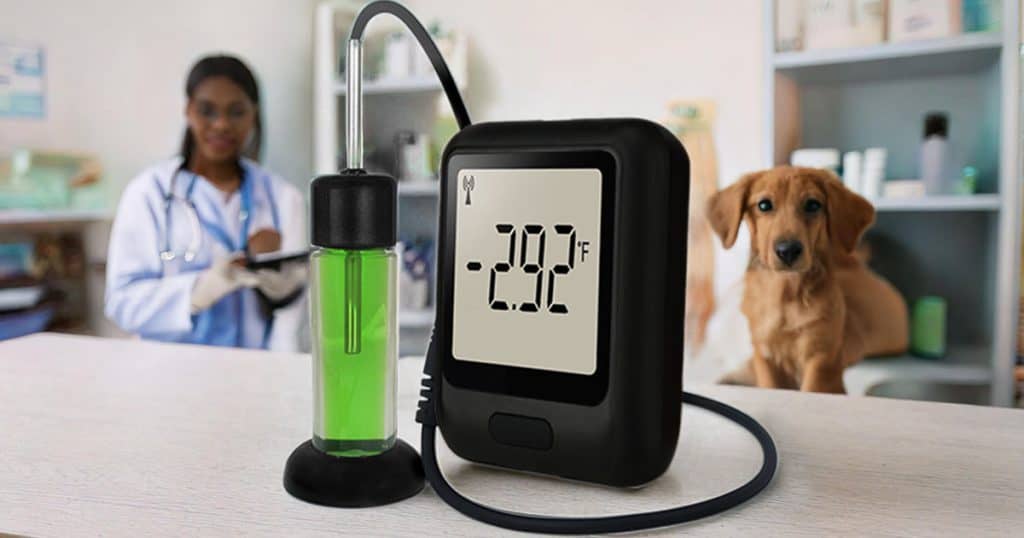
Automated temperature monitoring uses a temperature data logger, WiFi sensor or cloud-connected monitoring device to record storage conditions at regular intervals.
Instead of relying only on one or two manual readings each day, automated systems create a continuous digital record of fridge, freezer or cold storage temperatures.
In veterinary practices, this can support:
- Fridge temperature monitoring
- Vaccine storage monitoring
- Refrigerated medicine storage
- Cold chain monitoring during transport
- Digital compliance records
- Temperature excursion investigations
- Audit-ready reporting
Automated monitoring does not replace good stock control, staff training or standard operating procedures. It strengthens them by giving practices better visibility over what is happening between manual checks.
Veterinary Medicines Need the Right Storage Conditions
Not all veterinary medicines have the same storage requirements. Practices should always follow the product label and Summary of Product Characteristics.
The RCVS guidance also states that medicines, including during transport, should be stored according to label instructions and the relevant Summary of Product Characteristics.
For many veterinary vaccines, fridge storage between 2°C and 8°C is common. NOAH’s vaccine storage guidance highlights correct fridge storage within this range and warns that incorrect storage temperature can affect vaccine potency.
But the key point is broader than vaccines.
Veterinary practices may also store refrigerated medicines, biologics, samples or other temperature-sensitive products. For all of these, the aim is not simply to keep stock cold. It is to keep each product within its correct approved storage range.
That makes reliable temperature data essential.
What Can Go Wrong in a Veterinary Fridge?
Many fridge issues are not obvious at first glance.
A veterinary fridge may appear to be working, while temperatures inside are moving outside the safe range. This can happen because of equipment faults, poor airflow, stock positioning or frequent door openings.
Common problems include:
Temperature excursions
A temperature excursion happens when a product is exposed to conditions outside its required range. Even short excursions may need to be investigated, especially for high-value or sensitive veterinary medicines.
Missed overnight failures
A fridge fault that starts at 8pm may not be seen until the next morning. A manual log taken at closing time and opening time will not show the full pattern unless there is continuous temperature data.
Poor stock placement
Products stored too close to the back wall, cooling element or fridge door may experience different temperatures from the rest of the fridge.
Incomplete records
Paper logs can be misplaced, misread or filled in late. That creates extra pressure during inspections, internal reviews or stock investigations.
Transport gaps
Temperature-sensitive veterinary medicines may also need protection during transport between premises, vehicles or client sites. VMD inspection criteria specifically include storage during transport in relation to product instructions and temperature records.
These are exactly the kinds of issues automated temperature monitoring is designed to make visible.
How EasyLog Supports Automated Temperature Monitoring
Lascar’s EasyLog range helps veterinary practices simplify fridge temperature monitoring and gain reliable visibility over storage conditions.
For practices managing one fridge, a standalone USB temperature data logger may provide a simple way to record and download temperature data.
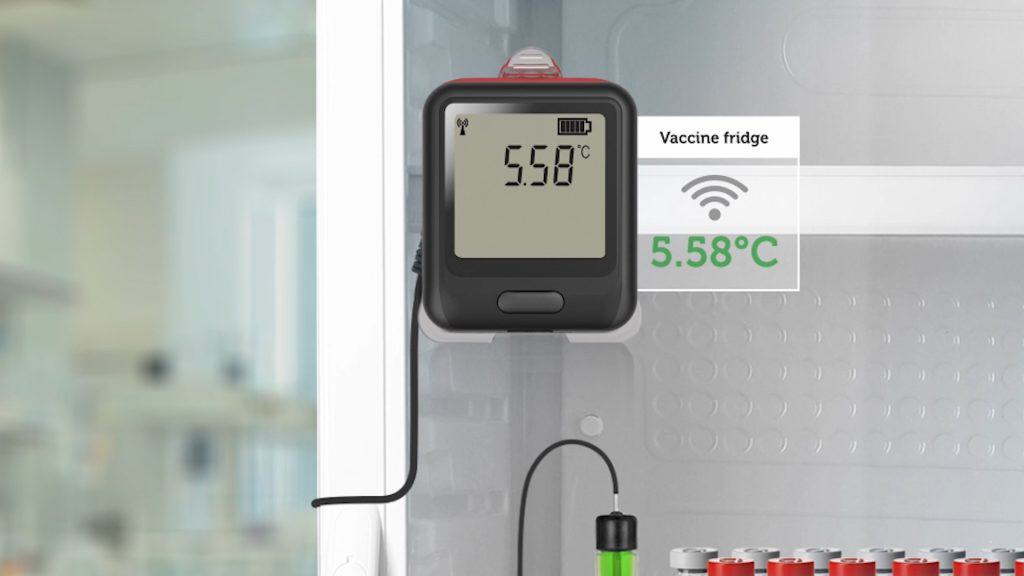
For teams managing multiple fridges, sites or medicine storage areas, EasyLog Cloud can give greater visibility. Lascar’s EasyLog Cloud allows users to view, analyse, download and share recorded data from wireless EasyLog devices.
Lascar’s WiFi temperature data loggers also support real-time monitoring, programmable alarm thresholds, and email or SMS notifications depending on the device.
This means veterinary teams can:
- Monitor multiple fridges remotely
- Access temperature data when needed
- Receive alerts when temperatures move out of range
- Keep clearer digital records
- Reduce repetitive manual logging
- Improve confidence in medicine storage
Choosing the Right Monitoring Setup for a Veterinary Practice
The best setup depends on the practice, the products being stored and how records need to be accessed.
A small veterinary clinic with one medicine fridge may only need a simple data logger with clear high and low alarm settings.
A larger practice, hospital or multi-site group may benefit from cloud monitoring, remote alerts and centralised reporting.
A practice storing vaccines may want a dedicated vaccine monitoring solution. The EL-WiFi-VACX, for example, is a vaccine data logger that records accurate temperature readings, it includes a glycol bottle thermistor probe, calibration certificate and software.
The most important questions to ask are:
- How many fridges or storage areas need monitoring?
- Are products checked only on site, or across multiple locations?
- Are alerts needed outside working hours?
- Is transport monitoring required?
- How quickly does the team need to access records?
- Are digital reports needed for inspections or internal audits?
Answering these questions helps practices choose the right balance of USB, WiFi and cloud-connected monitoring.
Manual Logs Are No Longer Enough on Their Own
Manual temperature logs still have a place in veterinary medicine storage. They can support daily routines and encourage staff awareness.
But used alone, they leave too much unseen.
Automated temperature monitoring gives veterinary practices a more reliable way to protect temperature-sensitive medicines, maintain traceable records and respond quickly when something goes wrong.
For busy veterinary teams, that means less time spent chasing paperwork and more confidence that medicines are being stored safely around the clock.
Lascar’s EasyLog range supports veterinary practices with USB, WiFi and cloud-connected temperature monitoring solutions designed to simplify compliance, reduce manual admin and provide 24/7 visibility over medicine storage conditions.